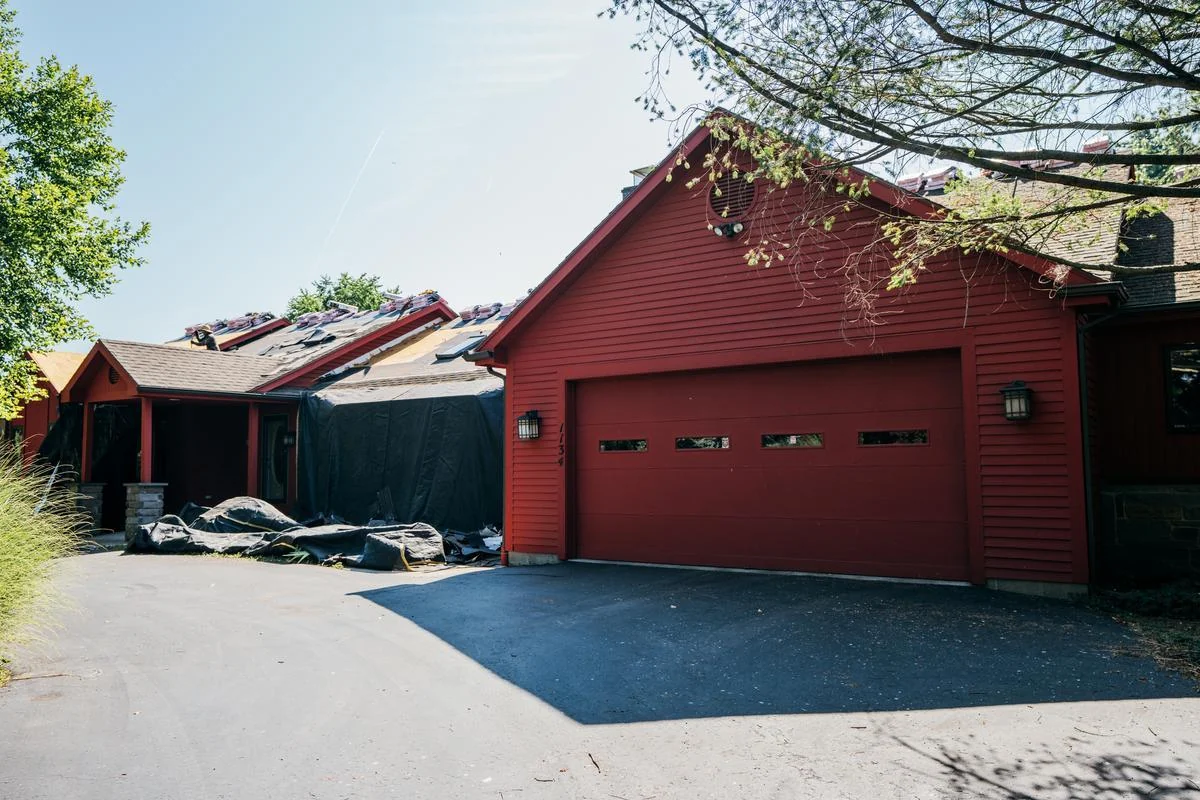
A garage fire or shed fire can turn a familiar part of your property into a pile of charred framing, melted siding, and ruined tools in a matter of minutes. Once the flames are out and everyone is safe, the next question is what to do with everything that’s left behind.
Fire debris removal takes more planning than an ordinary cleanout. Burned material can rekindle, ash can carry hazardous substances, and your insurance company may need to see the damage before anything is hauled away. Here’s how Harrisburg-area homeowners can clear out what’s left safely, from the fire department’s all-clear to the day the dumpster is picked up.
Wait for the All-Clear Before You Start
Don’t begin cleanup until the fire department says the site is safe. Even when a fire looks completely out, hidden pockets inside walls, under collapsed roofing, or deep in a pile of stored items can smolder for hours and flare back up.
Structural damage is the other big risk. A fire can weaken rafters, wall studs, and roof decking in ways that aren’t obvious from the outside, so a garage or shed that’s still standing may not be safe to walk into. Stay out of any structure with a sagging roof or leaning walls until a professional takes a look.
If power or gas ran to the building, leave those lines alone until your utility company or a licensed electrician has checked them. And if the fire started in an attached garage, have the house inspected too, since heat and smoke don’t stop at the shared wall.
Call Your Insurance Company Before You Toss Anything
It's natural to want the mess gone as fast as possible, but throwing things out too soon can hurt your claim. Many homeowners policies require the insurer to inspect damaged property before its disposed of.
Call your insurance company as soon as you can and ask what they need from you before cleanup starts. Take photos or video of the damage from several angles, then hold off on clearing debris until your adjuster gives you the go-ahead. Once you know what can go, having a dumpster lined up lets you move quickly.
Protect Yourself While You Work
Treat ash and burned debris as hazardous. When building materials, plastics, and stored products burn, they can leave behind residue you don’t want on your skin or in your lungs. Before you start sorting or hauling, gear up with the following.
- An N95 mask or better
- Heavy-duty work gloves, with nitrile gloves underneath when you’re handling ash
- Safety glasses or goggles
- Long sleeves, long pants, and sturdy boots
Keep children and pets away from the work area. Move slowly so you don’t kick up ash, and don’t wash ash or debris toward storm drains.
The age of the building matters too. Older garages and sheds sometimes contain asbestos in siding, roofing, or insulation, and fire damage can make it more likely to break apart. If you’re not sure what your building was made of, have it tested by a qualified contractor before you disturb the debris. Asbestos can’t go in an Oaks Dumpster Rental dumpster, so any material that tests positive needs to be handled by a licensed abatement company.
Make Sure Debris Is Soaked and Can’t Relight
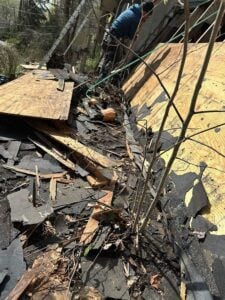
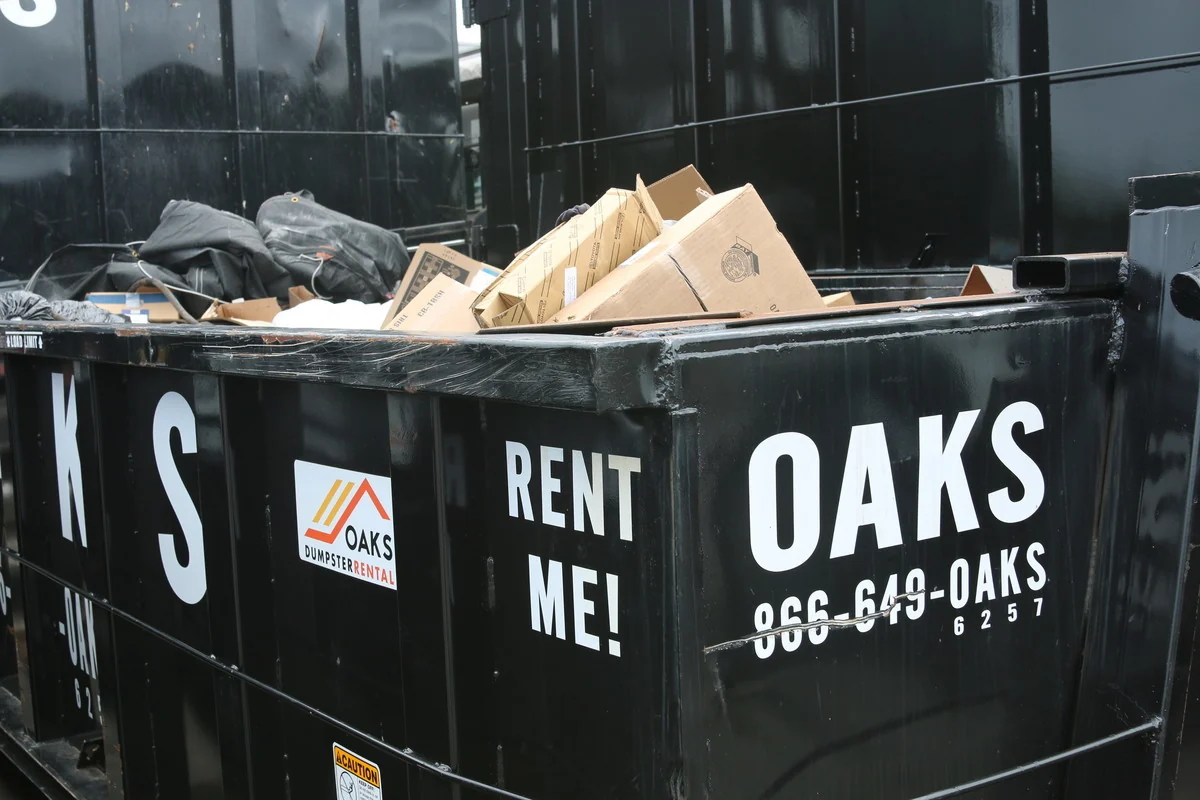
This is the most important rule for loading fire debris. We accept burned materials as long as they're completely wet and have no chance of relighting. That protects your property, our drivers, and the disposal facility.
Before anything goes into the dumpster, soak it thoroughly with a hose, including the inside of piles where heat can hide. Pay extra attention to thick lumber, stacked materials, and anything that was packed tightly together. If something is still warm, smoking, or smells like it’s smoldering, leave it where it is. If it starts to smoke or flare back up, call 911.
Load in batches rather than all at once, and give each batch a final soak before it goes in.
What Can Go in the Dumpster
Most of what’s left after a garage or shed fire can be loaded, as long as it’s fully wet. That includes the following.
- Charred framing, rafters, and lumber
- Burned drywall, insulation, and paneling
- Roofing shingles and damaged siding
- Wet ash and burned debris
- Scorched shelving, workbenches, and cabinets
- Damaged furniture, boxes, and stored belongings
- Lawn mowers, snowblowers, and other power equipment, once the fuel and batteries are removed
Some common garage items can’t go in, burned or not.
- Gasoline, gas cans with fuel in them, and other fuels
- Batteries, including car batteries and power tool batteries
- Paint and household chemicals
- Tires
- Refrigerators, freezers, and other appliances with refrigerant
- TVs and computers
- Asbestos
Not sure about something? Give us a call before delivery day and we’ll let you know whether it can go in.
Where to Take Fuel, Batteries, and Chemicals
Garages and sheds tend to be where the gas cans, motor oil, paint, and lawn chemicals live, so you’ll likely be left with a few items that need another route.
If you live in Dauphin County, call the county’s Department of Solid Waste and Recycling. The county’s household hazardous waste collection program is currently unavailable, so the department is the best source for current guidance on these items. If you live outside Dauphin County, check with your county’s solid waste or recycling office.
Choosing the Right Dumpster Size
We offer 12, 15, 20, 30, and 40-yard dumpsters. The right size depends on how much of the structure is coming down and what was stored inside. A shed that only lost its contents is a very different job than a detached garage that needs to come down completely.
Our dumpster size guide is a good place to start, but the easiest way to land on the right fit is to call us. Tell us what burned and how much is left, and we’ll help you choose. All materials count toward the dumpster’s weight limit, so a quick description of what’s coming out helps us point you to a size that works. Our pricing is upfront and transparent, and we’ll walk you through how extra charges like overweight fees work before delivery.
If the job turns out bigger than expected, we offer mid-project dumpster swaps. We’ll pick up your full dumpster and drop off an empty one so you can keep working. The standard rental period is 7 days, which gives you room to soak, sort, and load at a safe pace.
Delivery and Placement
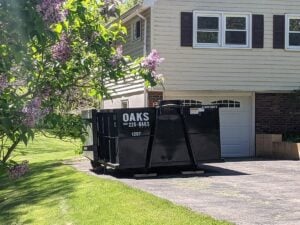
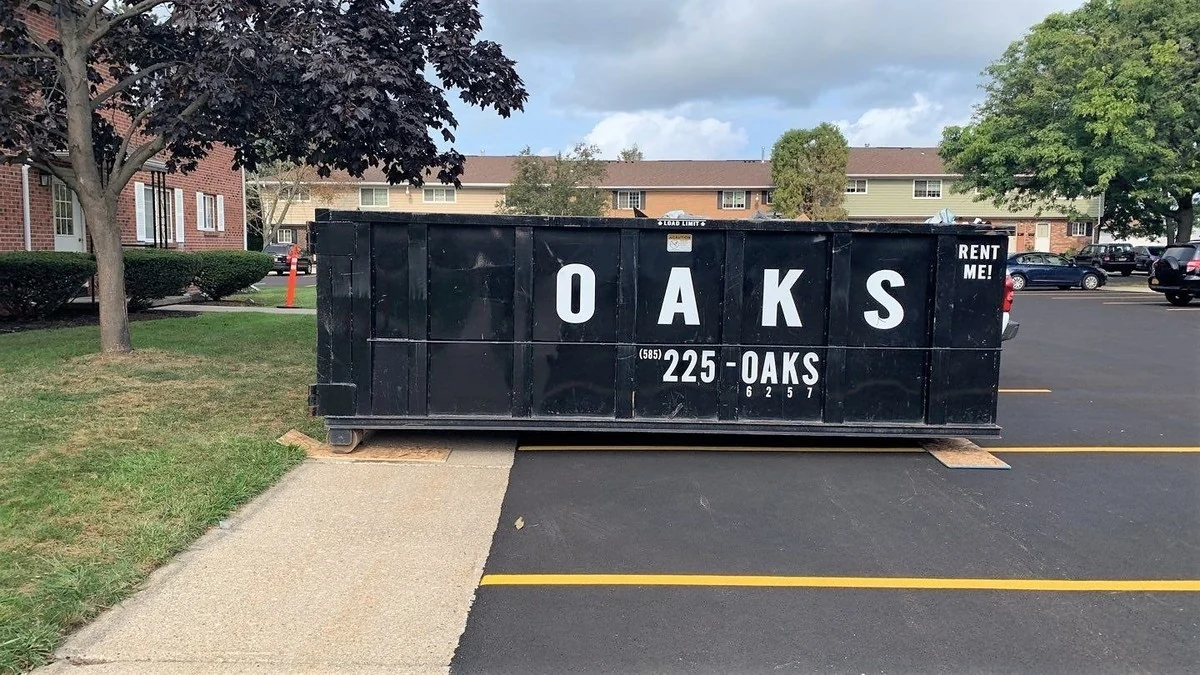
Plan to have the dumpster placed on your driveway. If you’re thinking about putting it on the street, check with the City of Harrisburg or your township first, since street placement may need approval. Before delivery day, keep the spot where the dumpster will sit clear of debris, vehicles, and low-hanging branches, and leave plenty of distance between it and any damaged structure. Our drivers lay wooden boards under the rails and rollers on every delivery to help protect your driveway, so there’s nothing extra you need to provide.
Get Fire Debris Off Your Property
A garage or shed fire is stressful enough without the cleanup dragging on. Once the fire department has cleared the site and your insurance company has seen the damage, a dumpster lets you clear everything out in one go instead of making trip after trip.
If you’re planning a dumpster rental in Harrisburg, PA, call Oaks Dumpster Rental at 717-373-2344. We’ll help you pick the right size, answer questions about what can go in, and get a dumpster to your driveway when you’re ready to start.
Oaks Dumpster Rental: Quality You Can Trust
At Oaks Dumpster Rental, we offer various dumpster sizes to meet your needs. Our dedicated representatives are always here to answer questions so your rental process goes smoothly. Call or contact us today, and we’ll be happy to help. Book your dumpster today to get started!